
 What causes Lyme disease?
Lyme disease is caused by a bacterial infection which is transmitted through the bite of certain ticks, predominantly the deer tick. It is most common during the summer months, although it can occur year-round.
What are the symptoms of Lyme disease and how soon do they show up?
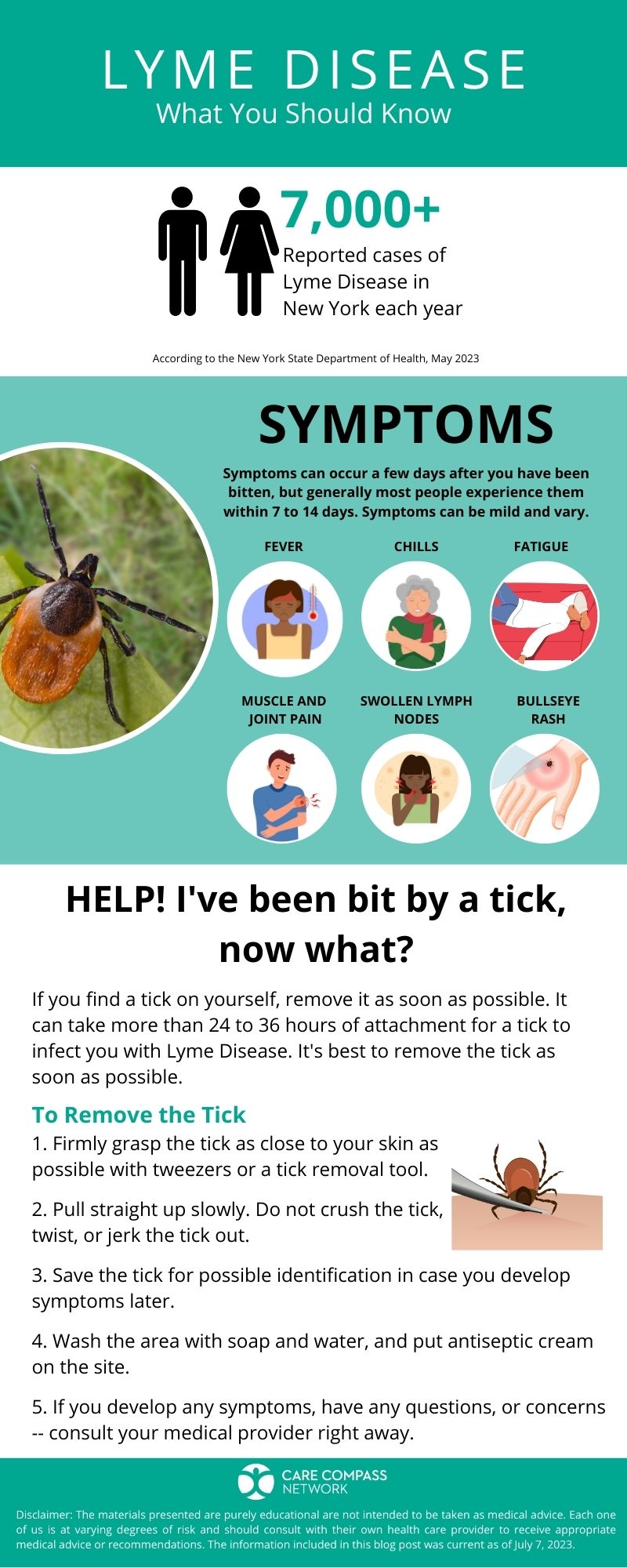
Symptoms can occur just a few days after you have been bitten, although people generally experience them within 7 to 14 days. They can appear up to 30 days after the tick bite. Early on symptoms include fever, chills, headache, fatigue, muscle and joint pains, and swollen lymph nodes. About 4 in 5 people may see a characteristic “bullseye” rash. Symptoms can be mild and extremely variable.
What happens if Lyme disease is not treated right away?
If early infection is not treated, Lyme disease can get worse and progress over weeks to months. More severe symptoms can appear including multiple skin lesions, neck pain and stiffness, muscle weakness, irregular heartbeat, back and joint pains, extremity pain, numbness or weakness, and eye symptoms that potentially can cause pain or vision loss. Later symptoms can include arthritis in the large joints, especially the knees. Also some people experience post-Lyme disease syndrome with symptoms such as pain, fatigue, and difficulty thinking or “brain fog”.
What is the best protection against Lyme disease?
The best protection is actually prevention. If you are going into tall grass or brush, wear light-colored protective clothing such as long pants tucked into your socks, long sleeved shirts, and closed toe shoes. Clothing can be treated with permethrin, which does kill ticks. Products containing DEET can be used on your body. These products repel ticks, but don’t kill them, and are not 100% effective.
What should I do if I have been in an area where there are ticks?
When you are finished for the day, check yourself, your children, pets, and clothes for ticks, and shower within 2 hours to potentially wash off unattached ticks. Pets such as dogs are very susceptible to ticks and can get Lyme or bring ticks into the house – your vet may recommend a tick preventative medication.
I found a tick on myself, what should I do?
If you get a tick on yourself or you find one on your pet, remove it as soon as possible, the sooner the better! It can take more than 24-36 hours of attachment for a tick to actually infect you with Lyme.
How do I remove a tick?
 Do not touch the tick with your bare hand. Grasp it as close to the skin as possible with tweezers or a tick removal tool and pull straight up slowly and steadily. Do not crush the tick, and do not twist or jerk the tick out. Do not apply heat or any kind of chemical substance such as petroleum jelly or nail polish. Save the tick for possible identification, in case you develop symptoms later. Wash the bite area well with soap and water and put an antiseptic cream on the site.
Is there a test for Lyme disease?
Lyme disease is diagnosed based on symptoms, physical findings, and the possibility of exposure to infected ticks. There is no specific test for Lyme disease. Antibody tests can be used to look for signs that our immune system has responded to the infection, however, it can take weeks for this test to turn positive. An initial test can come back negative, even when you have an early infection.
Should I contact my doctor if I find a tick on myself or I have been in area where there are ticks and I am experiencing symptoms?
 In areas such as NY state that are highly endemic for Lyme disease, a single prophylactic dose of an antibiotic called doxycycline can be considered to reduce the risk of acquiring Lyme disease after a high-risk tick bite. This can be discussed with your healthcare provider. In addition, if you have symptoms be sure to see your healthcare provider as there are specific antibiotic treatments available for each stage of Lyme disease.
Are there vaccines that can prevent me from getting Lyme disease?
Currently there are no human vaccines for preventive purposes. It should also be noted that there are other potential diseases that can be transmitted through a tick bite.
Download Promotional Resources
Infographic – Download
Social Media/Digital Banner – Download

Additional Resources
CDC
NY State Department of Health
Johns Hopkins Medicine
Disclaimer: The materials presented are purely educational are not intended to be taken as medical advice. Each one of us is at varying degrees of risk and should consult with their own health care provider to receive appropriate medical advice or recommendations. The information included in this blog post was current as of July 19, 2023.